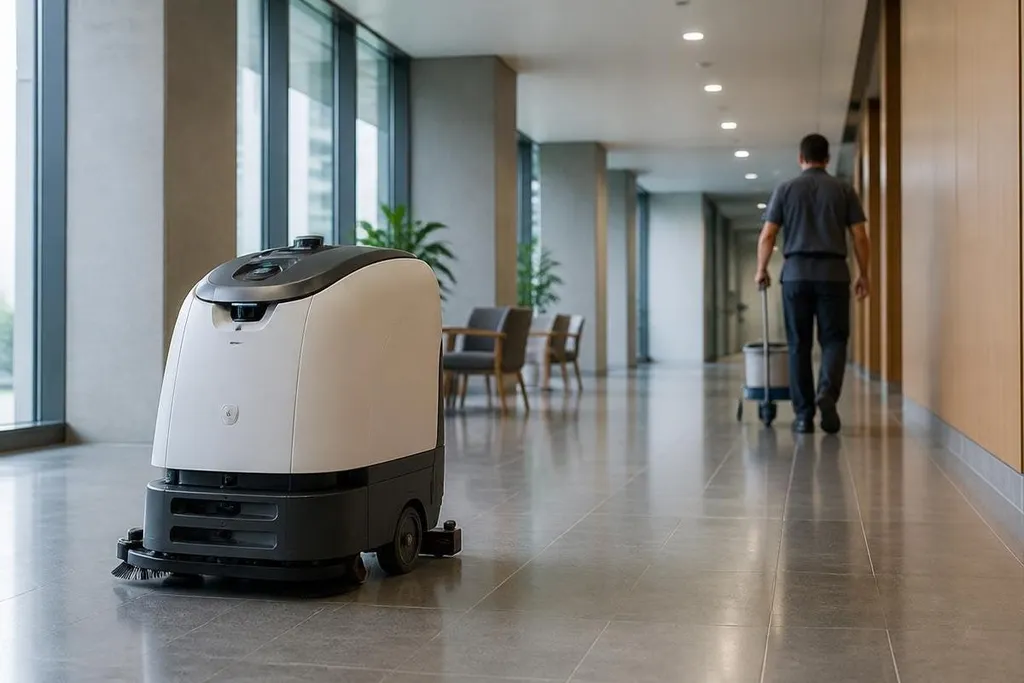
A cleaning robot can scrub floors, collect waste, or work through a set route without constant human control. The business opportunity starts when a company connects that task to a buyer, a service contract, and a clear result.
- Sell the robot, or sell cleaning hours supported by the robot.
- Build around one repeatable site task before adding more functions.
- Count setup, support, charging, and human checks in the price.
Sell machines to a clear buyer
The most direct model is selling a robot to a facility owner or cleaning contractor. That buyer may value fewer manual floor passes, more regular cleaning records, or safer work in areas that are difficult to staff.
A supplier needs to choose one job and prove that the robot can do it in the buyer’s building. Floor type, door thresholds, lifts, stairs, people, wet areas, and charging space all change the job.
A robot that works in an empty hallway may need a different setup in a busy store.
The sale also includes work after delivery. Site mapping, operator training, software updates, spare parts, battery replacement, and fault checks can form a paid support plan. The hardware gets the first payment; service keeps the account useful over time.
Price should follow the task. A buyer may compare the robot with staff hours, rented equipment, or a cleaning contractor, so a list of features won't answer the buying question. The supplier needs to show what the robot cleans, how often a person must check it, and what happens when the route stops.
Offer cleaning as a service
A service company can buy the robots and charge for completed cleaning work. The customer pays for a cleaner floor or a regular route, while the service company handles operation, repairs, and staff scheduling.
This model shifts the sales pitch from hardware to output. The service provider can set a visit plan for a retail floor, office corridor, hotel lobby, or transport building. Those sites differ in traffic and layout, so the contract needs a defined work area and a clear handoff when the robot cannot finish.
A person still matters. They may prepare the area, refill supplies, remove objects from the route, inspect the result, and move the robot between floors. The robot can take on repeat passes, but the service price has to include those human tasks.
The risk sits with the operator. A blocked route or failed charge cycle can affect the customer’s cleaning schedule, so the provider needs spare capacity and a repair plan before promising a fixed service level.
Build the software and support layer
Some companies may sell tools around cleaning robots instead of making the hardware. A software product could manage routes, work orders, alerts, usage records, and proof that a task was completed.
That layer becomes useful when a customer has robots from more than one supplier. The software can give a site manager one place to check routes and faults, but the company must confirm which robot controls, maps, and data it can access.
Support firms can also focus on site surveys, system setup, training, and repairs. This suits buyers that want automation but don't have staff who can handle robot software or fault reports. The work is practical, and its value depends on response time and clear limits.
Cleaning-robot contracts need more than a sales demo. Reports on named companies, machines, site trials, and service costs from Robot24.com robotics coverage can help you judge which jobs are ready for paid work before choosing a narrow first market.
Choose a narrow first market
A new company may want hotels, hospitals, airports, offices, and shops at once. That spreads sales effort and forces the robot to handle different rules, layouts, and cleaning needs before the team has learned one repeatable job.
A narrow market gives the company a tighter test. It can define the floor area, cleaning window, human checks, charging point, and result the customer will accept. The same plan can then move to similar sites.
I'd start with one task in one type of building, then add nearby jobs only after the first contract works without daily rescue work.
A practical business check
Before spending on hardware or software, check these points:
- Name the task: Write down the surface, route, cleaning method, and time window.
- Find the payer: Identify the person who owns the cleaning budget and approves site changes.
- Count human work: Include setup, checks, refills, object removal, repairs, and reporting.
- Set the proof: Agree on the area cleaned, schedule, inspection method, and failure response.
- Plan the second site: Confirm that the same robot and staff plan can work in a similar building.
A cleaning robot business works when the paid service is clear before the machine arrives. The next useful step is a small site test with a written task, a named operator, and a price that includes the work around the robot.